

Kratom: What You Need to Know and Its Legal Status

IS KRATOM LEGAL?
Well, it depends where.. For example, in the Czech Republic, kratom is not officially approved as a nutritional supplement or food, which means it is sold only as a collector's item. So you can buy it, but strictly for this purpose.
In some countries, however, kratom is legally restricted. You can find the current list of countries with legislative restrictions on kratom: HERE.
WHAT IS KRATOM?
Mitragyna speciosa, known simply as kratom, is a tropical tree from the coffee family (Rubiaceae), which also includes coffee plants. It originates from Southeast Asia and commonly grows in countries such as Thailand, Indonesia, Malaysia and the Philippines. It grows up to 30 meters in height and its leaves are its most valuable part -- they contain active alkaloids that are responsible for its effects.
Kratom was first described in the 19th century by Dutch botanist Pieter Willem Korthals, who recorded its use by indigenous people. In its homeland, it was mainly used for its stimulating and relaxing properties. Local workers often chewed fresh leaves to increase their energy during physically demanding work, or used it as a natural remedy for pain relief or relaxation.
WHAT DOES KRATOM LOOK LIKE?
Kratom is characterized by:
- Large dark green leaves: They have an oval shape and grow up to 20 cm in length. The leaves contain alkaloids such as mitragynine and 7-hydroxymitragynine, which are the main components affecting kratom's effects.
- Yellow flowers: The flowers are small, cluster into spherical formations and are pollinated by wind.
- Strong trunk: The tree has a strong, well-developed structure that allows it to survive in tropical environments.
WHERE DOES KRATOM GROW?
Kratom naturally grows in tropical forests of Southeast Asia. It thrives most in areas with high humidity, temperature and rich soil. Indonesia is among the largest producers of kratom, providing most of the world's production. It is also grown in Thailand, Malaysia and the Philippines.
Contrary to some incorrect information, kratom is not common in Africa. Although the related genus Hallea grows there, it is a different type of tree that does not have the same alkaloid composition as Mitragyna speciosa. 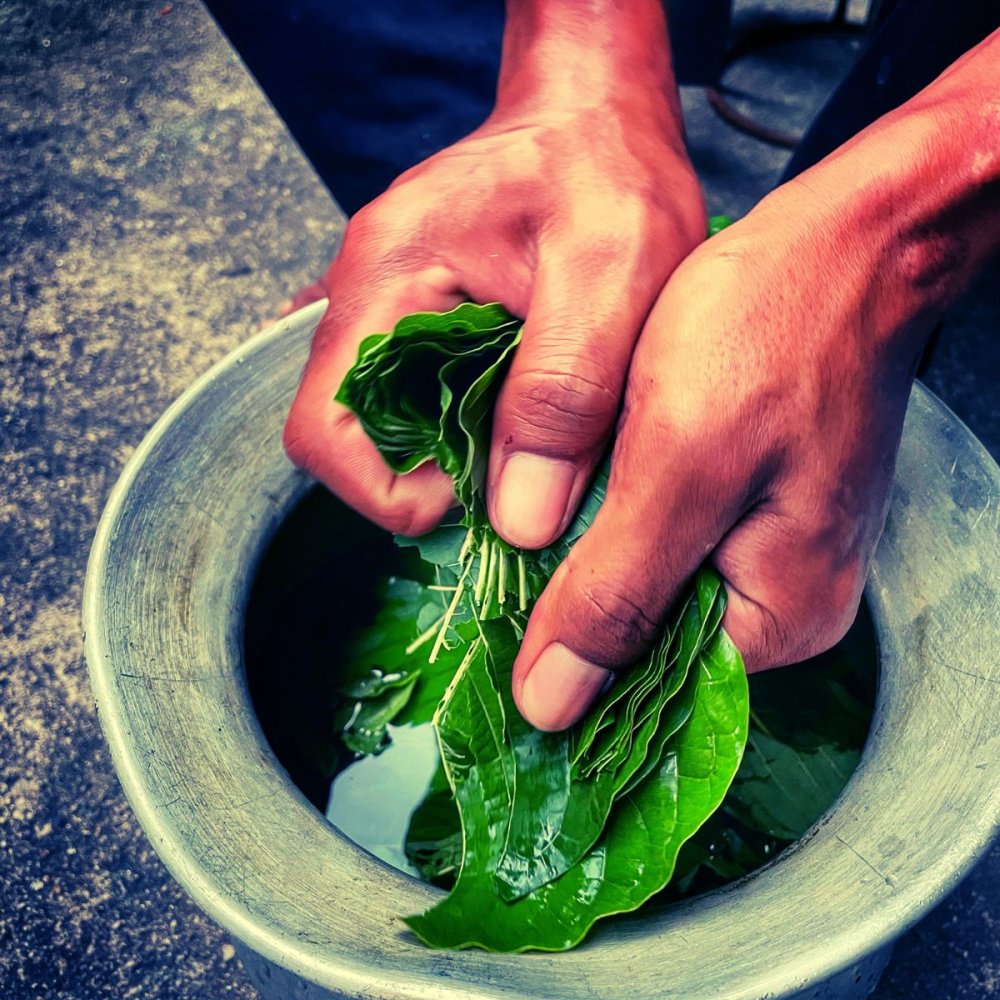
WHAT MAKES KRATOM UNIQUE?
What makes kratom exceptional are the alkaloids contained in its leaves. The most famous of them are:
- Mitragynine: The main alkaloid that forms the majority of content in the leaves. It has both stimulating and relaxing properties depending on the dose.
- 7-hydroxymitragynine: Less prevalent but much more potent alkaloid, which is often mentioned in connection with analgesic properties.
Kratom is not an opiate, despite its effects often being compared to opiates. Unlike opiates, however, it binds to different receptors in the brain, which makes it a different substance. Nevertheless, increased caution is necessary.
TRADITION AND MODERN USE
Historically, kratom was mainly used:
- To increase energy: Local workers in Southeast Asia chewed leaves to handle long hours of work in the fields.
- For pain relief: Indigenous cultures used kratom as a natural analgesic.
- As part of rituals: In some cultures, kratom was considered a sacred plant.
Today, kratom is popular around the world, primarily as an alternative natural product. Due to legislative restrictions, however, it is often sold as a collector's item, although it is obvious that its use extends beyond this category.
COLOR AND PROCESSING OF KRATOM
Kratom is traditionally divided into four basic categories according to the color of veins on the leaves: green, white, red and yellow kratom. These colors, however, are not always clearly associated with the variety of the tree, as is often incorrectly claimed. In reality, the color primarily reflects the age of the leaves, harvesting methods and processing method. Let's look at the individual types and processes in more detail:
GREEN KRATOM
- Color: Soft green.
- Processing method: Leaves are collected in the middle stage of maturity. After harvest, they are dried in direct sunlight or in the shade. This allows them to retain their fresh green color and lower level of oxidation.
WHITE KRATOM
- Color: Light, to creamy white.
- Processing method: Leaves are harvested at a very early stage of maturity, when they have a higher content of certain alkaloids. After harvest, they are dried predominantly in the shade, which minimizes oxidation and preserves the lighter color.
RED KRATOM
- Color: Dark red to brown.
- Processing method: Leaves are collected at full maturity when they reach the peak of their development. After harvest, they undergo a fermentation process that enhances their color and chemical composition of the leaves.
YELLOW KRATOM
- Color: Golden to yellow-brown.
- Processing method: Yellow kratom is created by a specific drying process or as a mixture of leaves of various maturities (green, white and red). In some cases, the yellow color is obtained by a unique oxidation process during sun drying.
WHY IS PROCESSING IMPORTANT?
The method of harvesting and processing affects not only the color, but also the alkaloid content and resulting properties of kratom: 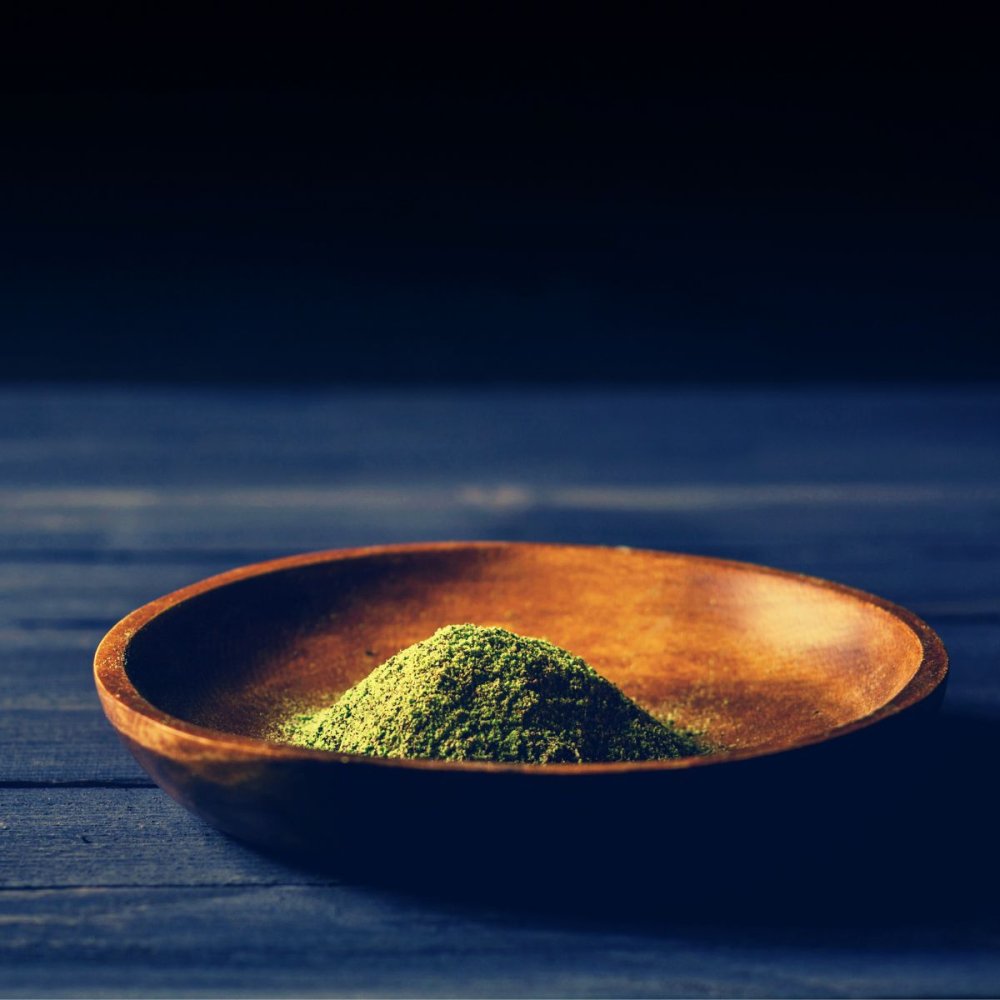
- Drying time affects how much the leaves oxidize and what their final chemical composition will be.
- Fermentation: This process changes the chemical composition of the leaves and gives red kratom its characteristic darker color.
- Combination of leaves: Some types, such as yellow or Maeng Da, are often a mixture of different harvest phases or processing methods, giving them unique properties.
MYTHS ABOUT KRATOM COLORS
It is often claimed that kratom colors are determined by the type of tree. This is not true, however. Differences in the properties of individual types of kratom are related more to the harvesting and processing process than to genetic differences between trees. Most of the kratom available on the market comes from the Indonesian part of Borneo, with variability being the result of human interventions in drying and fermentation.
TYPES OF KRATOM
There are many types of kratom with various names, such as "Borneo, Bali, Sulawesi, Malay, Bentuangie" etc. Some names are supposed to indicate the place of origin of kratom, such as Malay, or Bali and others indicate a unique variety such as Maeng Da. Here it is again somewhat controversial to claim that this information is 100% true, because it is very difficult to verify. A large part of kratom is grown in the Indonesian part of Borneo and determining whether kratom actually comes from Bali, or Vietnam, as the supplier states, is due to virtually non-existent regulation very difficult.
We on the e-shop do use all the above-mentioned names of kratoms, but we do not intend to deceive anyone. That is also the reason why we straightforwardly present this information here. We personally perceive differences between the mentioned types, which may be caused only by different processing, or it may truly be kratom originating from a different place.
"Maeng Da = our best mix"
Among our bestsellers is kratom Maeng Da which is generally reported to be a cultivated variety. However, much evidence suggests that it is rather a well-mixed blend. Despite this, we are very satisfied with this Maeng Da "mix", so according to us, it definitely deserves its primacy regardless of reality. 😉
WHY CAN’T YOU FIND MORE INFORMATION HERE?
Current legislation in the Czech Republic limits what information about kratom we are allowed to provide directly on the e-shop.
If you want to learn more about the current rules, what is changing, and how the new regulation affects the market, we recommend reading our article:
👉 New Kratom Legislation in the Czech Republic: Sellers’ and Customers’ Perspective