

Cocaine: Composition, Adulterants, Purity and Why Testing Matters
❄️ Overview of composition, common adulterants, indicative purity and testing options
Cocaine is one of the most well-known stimulants in the world, but also among substances with highly variable composition. What is labeled as "cocaine" on the market is often not pure cocaine, but a mixture of various substances with different effects and risks. It is precisely these unknown or hidden adulterants that represent one of the biggest problems.
This article offers an unbiased and informative perspective on what cocaine is, where it comes from, what adulterants most commonly appear in it, what the indicative purity is in Europe, and why it makes sense to analyze the composition of a substance before it becomes a problem.
🧪 What is cocaine
Cocaine is a powerful central stimulant that is obtained from the leaves of the Erythroxylum coca shrub. It belongs among substances that significantly affect the functioning of the nervous system, primarily by increasing the levels of certain neurotransmitters in the brain. The result is a short-term stimulating effect that people often associate with feelings of energy, alertness and mental activation.
Cocaine is typically associated with:
-
short-term increase in energy and attention
-
suppression of fatigue and hunger
-
feeling of self-confidence and mental "sharpness"
However, these effects are short and intense, which is one of the reasons why the substance carries a high potential for repeated use. At the same time, there is significant stress on the organism — especially the heart, vascular system and psyche. With frequent or long-term use, cocaine can lead to anxiety, sleep disorders, exhaustion, cardiovascular problems and the development of addiction.
📌 It is important to realize that the risks are not only determined by the substance itself, but also by its composition and purity, which are highly variable on the illegal market.
🌍 Origin and brief history
Coca leaves have a long tradition in the Andes region. For centuries they have been chewed or used in natural mixtures primarily to:
-
suppress fatigue
-
reduce hunger
-
better adaptation to high-altitude conditions
In this form, it involved low concentrations of natural alkaloids, which differ fundamentally from the modern form of cocaine.
The turning point came in the 19th century, when it became possible to isolate pure cocaine. The substance briefly appeared in medicine as well, for example as a local anesthetic. However, it soon became clear that it had a strong addictive potential and serious side effects.
In the 20th century, cocaine was gradually banned and pushed into the illegal sphere, where a new problem began to spread:
➡️ dilution, falsification and the addition of adulterants that have nothing to do with the original substance.
⚗️ What cocaine looks like on the market today
On today's illegal market, cocaine only exceptionally occurs as a single-component substance. In most cases it is a mixture where cocaine itself constitutes only part of the content. The rest consists of various adulterants that may have different effects and risks.
These adulterants are used for several reasons:
-
to mimic the stimulating or numbing effect
-
to reduce production and distribution costs
-
to mask low quality or low cocaine content
-
to create the impression of a "stronger" substance
From the user's perspective, the problem is that:
-
individual batches can vary significantly
-
effects are less predictable
-
risks can vary significantly from piece to piece
📌 Appearance, smell or taste are not reliable indicators of purity or composition.
A sample may appear "normal" but contain substances that significantly increase health risks or alter the effect.
It is precisely this unpredictability that is one of the main reasons why there has been increasing talk in recent years about testing the presence and purity of substances as a harm reduction tool.
⚠️ Most common adulterants in cocaine
It is precisely adulterants that represent the greatest unknown and also the greatest risk with cocaine. On the illegal market, cocaine rarely occurs as a pure single-component substance. In most cases it is a mixture of cocaine and other substances that have various purposes – from reducing costs to mimicking expected effects.
The most common adulterants include:
🔹 Levamisole
A substance originally used in veterinary medicine as an antiparasitic. It appears very frequently in cocaine, especially in Europe.
➡️ Why it is used:
Levamisole can enhance the stimulating effect and is cheap, which makes it an "attractive" adulterant.
➡️ Risks:
It is associated with serious damage to the immune system, changes in blood count and in some cases even skin necrosis. These effects are not immediately apparent and may only manifest after a longer period.
🔹 Local anesthetics
Various substances used in medicine for numbing.
➡️ Why they are used:
They induce the typical "numbing" that people associate with cocaine, and thus can mask low actual cocaine content.
➡️ Risks:
They stress the heart and nervous system, can affect heart rhythm and in combination with other stimulants increase the risk of unpredictable reactions of the organism.
🔹 Other stimulants
Various synthetic or semi-synthetic substances with different effect profiles.
➡️ Why they are used:
They mimic or prolong the stimulating effect, or replace part of the cocaine.
➡️ Risks:
Each substance has a different action, different stress on the organism and a different toxicological profile. A combination of multiple stimulants can lead to overload of the cardiovascular system, anxiety or collapse states.
📌 Important: Adulterants are not declared, cannot be smelled or seen and cannot be reliably detected without analysis.
📊 Indicative cocaine purity in Europe
According to available European data, the purity of cocaine varies significantly depending on region, distribution route and specific batch. There is no "standard".
Generally it can be said that:
-
low purity often ranges only in the order of tens of percent,
-
higher purity is rather exceptional and even that often contains various adulterants.
📌 Higher price does not automatically mean higher purity.
Price is influenced by a number of factors and is not a reliable indicator of composition.
It is precisely this unpredictability that is one of the main reasons why testing makes sense.
🧪 Why test cocaine – identification vs. purity
Testing a sample makes sense primarily because common sensory perceptions are not reliable:
-
appearance can be misleading
-
smell and texture guarantee nothing
-
different substances can have similar manifestations
It is essential to understand the difference between two types of testing:
🔹 Presence tests
Serve to verify whether the sample actually contains cocaine.
-
answer the question: "Is there cocaine or not?"
-
do not address other components
-
are fast and indicative
🔹 Purity and adulterant tests
Go a step further and allow:
-
detection of other components in the sample
-
distinguishing whether it is a single-component substance or a mixture
-
indicatively assessing the proportion of cocaine (%)
📌 The difference between "is there cocaine" and "what all is there and in what ratio" is fundamental – this is where the greatest informational value of testing lies.
🔬 How purity tests work
Purity tests use analytical principles that allow separation of individual sample components and their subsequent comparison.
Simply put:
-
different substances behave differently,
-
individual components "separate",
-
the result provides a visual overview of the sample composition.
Thanks to this, a much more accurate picture can be obtained than what just a color reaction offers.
⚠️ This is not laboratory certification nor precise percentage measurement, but a significantly higher level of information compared to basic tests.
🔎 Practical tests for cocaine composition and purity
If you want to go beyond just basic verification of substance presence, there are tests that offer a significantly more detailed view of sample composition. Below you will find an overview of tests that differ in purpose and depth of analysis and can be combined with each other.
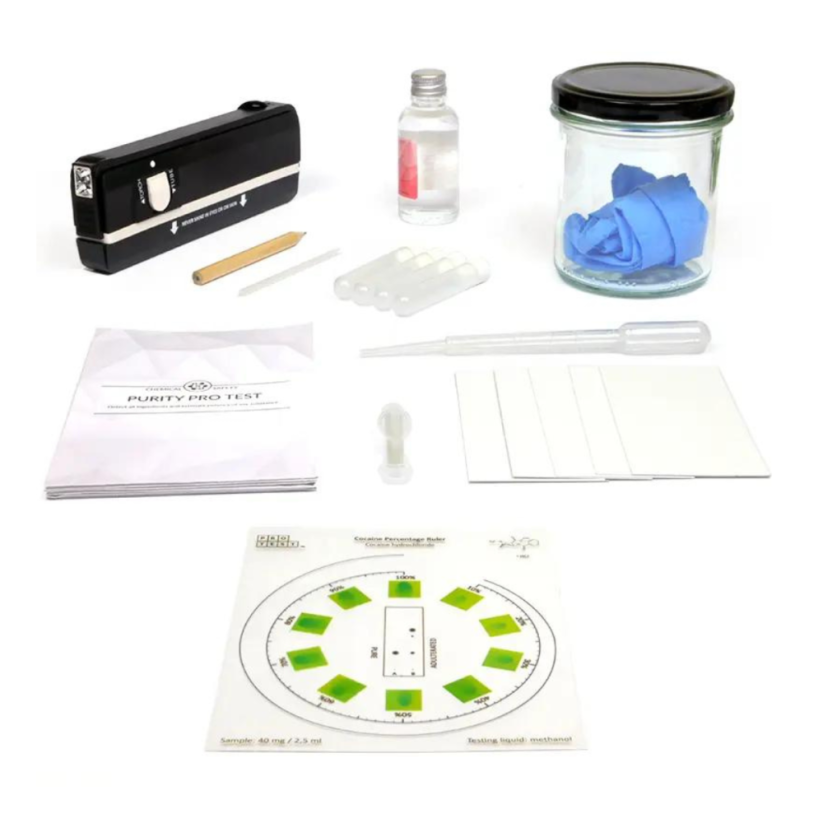
🧪 Cocaine Test Kit (TLC) – PRO Test – % purity
Advanced analysis of composition and adulterants
This test kit uses the principle of thin-layer chromatography (TLC), which allows:
-
determination of the number of components in the sample (each substance creates its own trace),
-
indicative estimation of their relative representation,
-
detection of whether it is a single-component or mixed material.
The TLC test is especially suitable for those who want to:
-
get an overview of purity and degree of adulteration,
-
detect the presence of common adulterants (e.g. caffeine, levamisole, local anesthetics),
-
compare different samples with each other.
⚠️ The TLC test does not determine the specific chemical identity of substances – for more precise identification it is recommended to combine it with reagent tests.
📌 Ideal choice for deeper indicative composition analysis.
🔬 MORRIS Test Kit – PRO Test
Rapid identification of substance presence
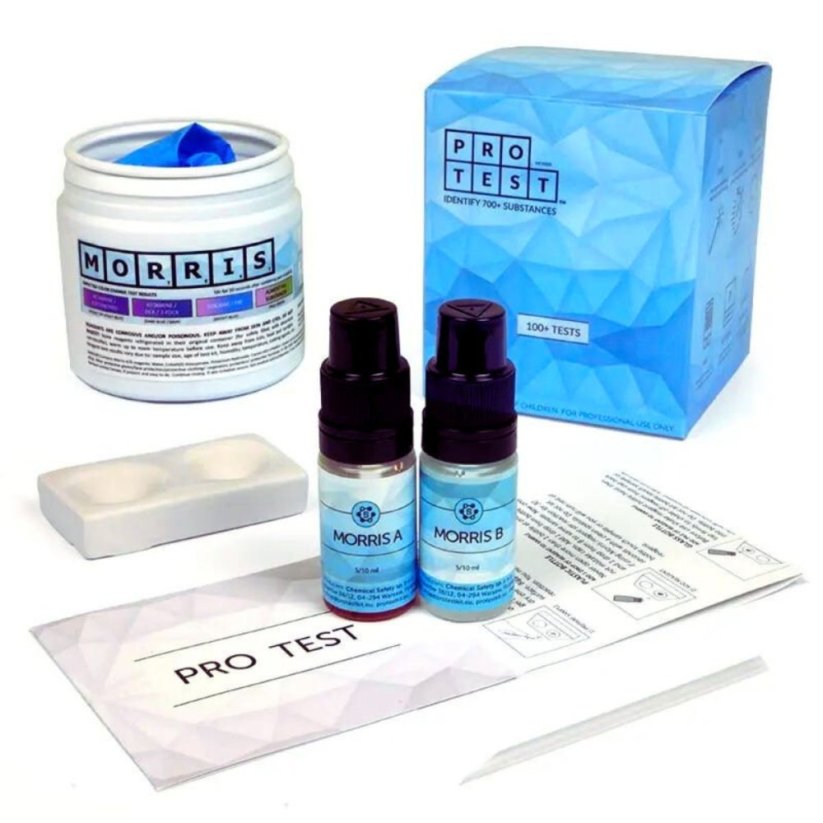
The Morris test serves for indicative identification of cocaine, ketamine and their derivatives using a color reaction.
It allows:
-
verification that the sample matches the declared substance,
-
exclusion of some undesirable or toxic alternatives,
-
obtaining results within a few minutes.
✔️ Simple use
✔️ Up to 100 tests per package
⚠️ The test does not determine purity or percentages – it only serves to verify presence.
📌 Suitable as a first testing step or complement to TLC analysis.
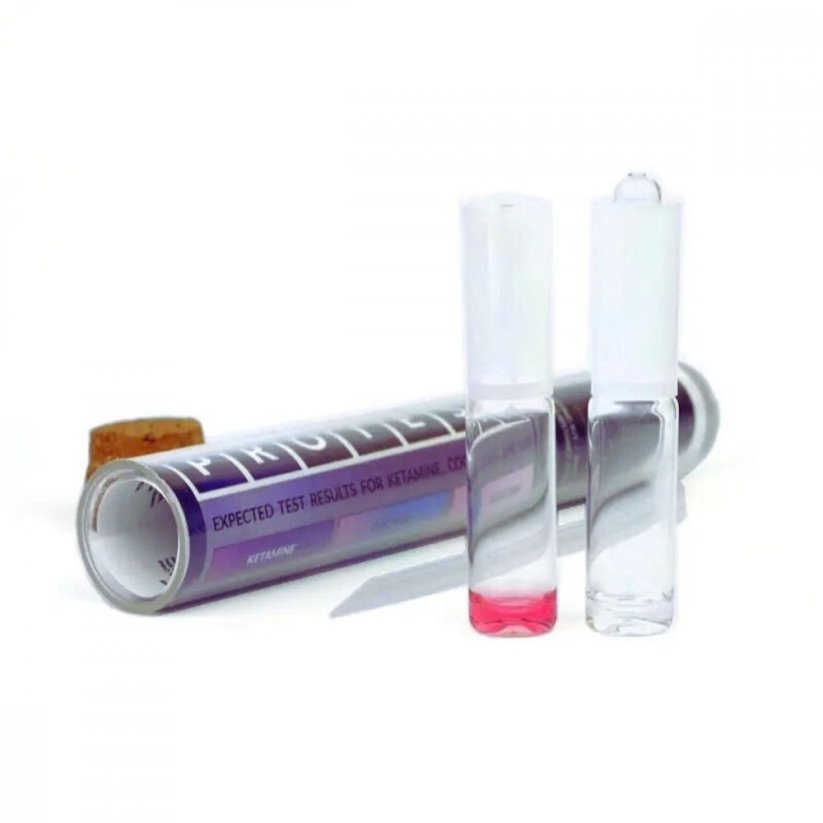
⚡ Cocaine / Ketamine Test – PRO Test (1 pc)
Single-use test for quick verification
This test uses Morris reagent and is intended for immediate single-use verification of whether the sample contains:
-
cocaine,
-
ketamine,
-
or another substance.
The result is readable through a color reaction:
-
cocaine → deep blue
-
ketamine → purple
-
other substances → different reaction
✔️ Very quick to use
✔️ Ideal for basic orientation
⚠️ Does not determine purity or quantity of substance.
📌 How to combine tests for better overview
You get the best overview of a sample by combining:
-
reagent test (presence verification),
-
TLC test (indicative overview of composition and purity).
This significantly reduces the risk that the sample contains unexpected adulterants or mixtures that cannot be recognized by the naked eye.
📎 For all tests, detailed instructions are available directly in the product description, so no previous experience is necessary.
🧠 Interesting facts about cocaine that are often not known
Cocaine is a substance where people often expect a "predictable" effect. However, reality is different. The same sample can act significantly differently in different people, even under similar conditions. The reason is not only individual metabolism, but also the sample composition, which can vary from piece to piece.
A major role is played precisely by adulterants. They can:
-
change the onset of effect (faster / slower),
-
affect its duration,
-
intensify stress on the heart and nervous system,
-
trigger unexpected side effects that people often mistakenly associate with the "quality" of the substance.
Another little-known fact is that repeated exposure to stimulants – especially in irregular composition – increases the risk of:
-
anxiety,
-
sleep disorders,
-
paranoid states,
-
mood swings and mental exhaustion.
📌 In practice, it turns out that unknown or variable composition is a more common cause of problems than the mere presence of cocaine. That is precisely why it makes sense to pay attention to being informed and analyzing the sample, not just subjective impression.
🛑 What to do if you feel you are losing control
With stimulants like cocaine, the line between "occasionally" and "too often" can be subtle. If you feel that:
-
use is no longer under control,
-
you're reaching for the substance more often than before,
-
you need it to function, concentrate or manage stress,
-
it's starting to have a negative impact on work, relationships or health,
➡️ it is important not to minimize these signals.
Seeking professional help is not failure or weakness. On the contrary, it is an expression of responsibility towards oneself. There are:
-
anonymous counseling centers,
-
addiction services,
-
support lines and centers,
that work without judgment and help find a way to address the situation safely and with respect.
📌 The sooner the problem is addressed, the easier it is to find a solution.
🧾 Summary
-
Cocaine available on the market is often a mixture of multiple substances, not a single-component sample.
-
Adulterants represent a significant health risk because their presence cannot be estimated by sight or taste.
-
Price or appearance are not reliable indicators of quality or purity.
-
Presence tests serve for basic substance identification.
-
Purity and adulterant tests provide a deeper overview of sample composition and help detect unexpected components.
-
Being informed is one of the most effective tools for risk reduction.
The goal of testing and education is not to support use, but to reduce risks associated with unknown composition and give people the opportunity to make more informed decisions.