

Opioids: Effects, Risks, Addiction and Why Testing Is Crucial
💊 Opioids Without Myths: Effects, Risks, and Why They're So Dangerous
Opioids are among the most effective pain relief substances known to humanity. At the same time, they represent the riskiest group of psychoactive substances when it comes to addiction, overdose, and death. This very combination – high effectiveness and high risk – makes them a topic that is often simplified, demonized, or misunderstood.
In medicine, opioids are irreplaceable. On the illegal market, however, they are often fatally dangerous. The difference between both worlds is enormous – and often invisible at first glance.
This article aims to explain opioids in depth, without sensationalism and without instruction:
-
how opioids work in the body and brain
-
why they are so highly addictive
-
what specific opioids exist and how they differ
-
why today's market is extremely risky
-
and why testing and awareness are matters of survival with opioids
🧠 What Are Opioids and Why Does the Brain React So Strongly
Opioids are a group of substances that bind to opioid receptors in the human body – specifically in the brain, spinal cord, and peripheral nervous system. These receptors are not some "foreign structure" but a natural part of human biology. The organism uses them to regulate pain, stress, and strain through its own substances, such as endorphins or enkephalins.
When a person injures their body, experiences extreme stress, or physical exertion, the brain releases endogenous opioids that:
-
suppress pain,
-
increase the chance of handling a crisis,
-
help the organism "survive the moment".
External opioids mimic this system, but the crucial difference is that they activate it much more powerfully, longer, and without natural regulatory brakes. The brain is not evolutionarily set up for this.
Why the μ-Opioid Receptor Is Key
The most important role is played by the so-called μ-opioid receptor, which is responsible for most of the effects of opioids – both desired and dangerous.
Its activation leads to:
-
suppressing pain perception
Painful signals stop being effectively transmitted to higher brain centers. This is why opioids are so effective in treating severe pain. -
inducing feelings of relief, calm, and euphoria
The brain interprets receptor activation as "safety". Tension, anxiety, and stress are released, which is one of the main reasons opioids are subjectively very attractive. -
slowing the respiratory center
At the same time, the μ-receptor suppresses automatic breathing regulation. With higher activation, the brain stops responding to carbon dioxide levels in the blood – a person simply stops breathing without realizing it.
This last effect is the key risk of opioids and the main mechanism of fatal overdoses.
Evolutionary Purpose vs. Modern Reality
From an evolutionary perspective, the opioid system has a protective function. It allows a person to overcome pain in extreme situations – during injury, escape, or fight for survival. Activation is short-term and naturally subsides.
Opioids from external sources, however:
-
activate regardless of actual threat,
-
bypass natural regulatory mechanisms,
-
create unnaturally strong "reward" signals.
The brain very quickly "remembers" that this substance brings immediate relief and safety, and begins to prioritize it. This is where the foundation of strong biological bonding arises, which underlies opioid addiction.
Simply put:
👉 opioids don't just deceive the mind, but directly interfere with the most fundamental survival regulatory systems.
This is why opioids are so effective in medicine – and at the same time why they are so dangerous on the illegal market.
💊 Specific Opioids: How They Affect Humans and How They Differ
Opioids are not one "unified" substance. They differ in potency, speed of onset, duration of action, and risk profile. These very differences often determine whether an opioid is a manageable tool in medicine or an extremely dangerous substance on the illegal market.
🌿 Morphine
Morphine is considered the standard reference opioid to which the strength of other substances is compared. In medicine, it's used for severe acute and chronic pain, such as in cancer patients, after serious injuries, or extensive surgeries.
It affects humans by:
-
significantly suppressing pain,
-
deep sedation and relaxation,
-
feelings of euphoria or "warmth".
The combination of relief and euphoria makes morphine subjectively very effective. At the same time, the brain reacts very quickly with adaptation.
The main risks of morphine are that:
-
tolerance develops relatively quickly, leading to dose escalation,
-
physical dependence develops – the body gets used to the opioid's presence,
-
at higher doses or combinations, respiratory depression occurs, which can be life-threatening.
💊 Codeine
Codeine is a weaker opioid that is partially metabolized into morphine in the body. This very fact causes its effect to be highly individual – in some people it works weakly, in others significantly stronger than expected.
It primarily works by:
-
mild pain suppression,
-
suppressing cough reflex,
-
drowsiness and sedation.
The risks of codeine often lie in that:
-
metabolism varies significantly between people,
-
in sensitive individuals, unexpectedly strong effects can occur,
-
combinations with alcohol or other sedatives increase the risk of respiratory depression.
Its "weaker reputation" sometimes leads to underestimating risks.
💊 Oxycodone / Hydrocodone
These semi-synthetic opioids are commonly prescribed for stronger or long-term pain. Compared to morphine, they often have higher subjective euphoria, which significantly increases their addictive potential.
They affect humans by:
-
strong pain relief,
-
pronounced euphoria,
-
feelings of detachment from body and surroundings.
The fundamental problem is that:
-
dependence develops very quickly,
-
doses tend to escalate,
-
overdoses are common, especially with long-term use.
These substances played a key role in the development of the modern opioid crisis.
⚡ Fentanyl
Fentanyl represents a fundamental shift in opioid risk. It's a synthetic opioid up to one hundred times stronger than morphine, used in anesthesiology and treatment of extreme pain.
It affects humans by:
-
very rapid onset of effects,
-
extremely powerful pain and consciousness suppression.
The risks of fentanyl are extraordinary:
-
even very small volumes can be fatal,
-
the therapeutic window is extremely narrow,
-
even minimal dosage errors can lead to respiratory arrest.
On the illegal market, fentanyl is particularly dangerous because it often appears as an unexpected adulterant in other substances.
💥 Heroin
Heroin is an illegal opioid derived from morphine. It's known for rapid brain penetration, leading to intense but short euphoric effects.
It works by:
-
very rapid euphoria,
-
strong feelings of relief and "warmth",
-
significant suppression of stress and pain.
Main risks of heroin:
-
extremely high addictive potential,
-
unknown and variable composition,
-
frequent substitutions or contamination with fentanyl.
The combination of rapid onset, strong euphoria, and unknown composition makes heroin particularly risky.
🩺 Buprenorphine
Buprenorphine is a so-called partial agonist, meaning it only partially activates the opioid receptor. This is why it's used in opioid addiction treatment.
It affects humans by:
-
reducing withdrawal symptoms,
-
stabilizing the receptor system,
-
lower euphoria than full agonists.
Buprenorphine risks:
-
addiction potential still exists,
-
combinations with other depressants are dangerous,
-
improper use can lead to overdose.
⚠️ Greatest Risks of Opioids (Why They're Exceptionally Dangerous)
🫁 Respiratory Depression
The most critical risk of opioids is their effect on the respiratory center. Opioids reduce the brain's sensitivity to elevated carbon dioxide levels, meaning the body stops responding to the need to breathe.
A person:
-
doesn't fall asleep normally,
-
gradually stops breathing,
-
often doesn't realize they're in danger.
This is the main mechanism of death from opioid overdose.
🤝 Addiction
Opioids are among substances with the highest addictive potential possible. They very rapidly develop:
-
physical dependence (the body "needs" opioids),
-
psychological attachment to relief and euphoria,
-
severe withdrawal symptoms upon cessation.
Withdrawal is usually not fatal, but is extremely unpleasant, which significantly increases the risk of relapse.
⚠️ Combinations with Other Substances
Particularly dangerous are combinations of opioids with:
-
alcohol,
-
benzodiazepines,
-
other sedative substances.
These combinations multiply respiratory depression and are a common cause of fatal cases.
🧪 Adulterants and Substitutions: Why Today's Market Is Extremely Risky
The current illegal opioid market is significantly more dangerous than ever before. It's not just about the opioids themselves, but about the chaotic and unpredictable composition of substances appearing on the market.
Unlike pharmaceutical production:
-
there is no concentration control
One dose may be relatively weak, the next from the same source several times stronger. A difference that with opioids can decide between "effect" and respiratory arrest. -
fentanyl substitutions and contaminations occur
Fentanyl and its derivatives often appear as adulterants or substitutes for other opioids – sometimes intentionally, other times due to production chain contamination. -
"same source" doesn't mean same composition
Even substances from one sales channel can vary significantly in composition. What worked "last time" may be fatally dangerous next time.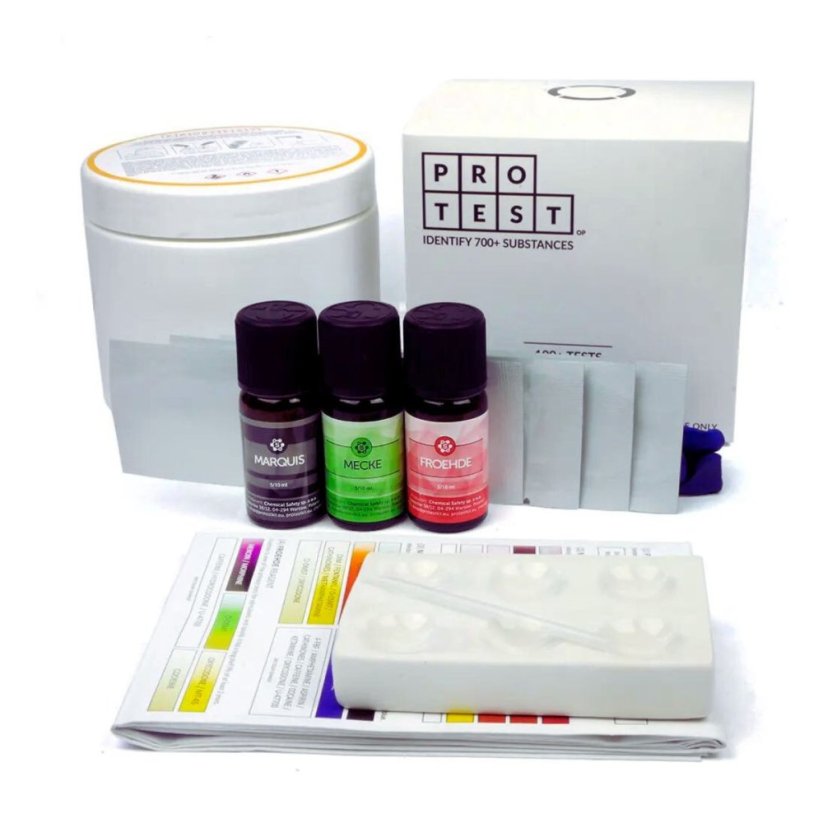
The result is a situation where users often have no real idea what they're facing. With opioids, even very small differences in potency or composition can have fatal consequences.
🔬 Why Opioid Testing Makes Crucial Sense
It's important to say this clearly and without illusions:
opioid testing doesn't guarantee safety.
However, it has crucial significance in that:
❌ it doesn't guarantee a substance is "safe"
Opioids remain risky even with known composition.
✅ it can detect the presence of fentanyl or its derivatives
And these substances are behind a large portion of fatal overdoses.
🔍 it can prevent fatal substitutions
Especially in cases where someone expects one substance but receives a significantly more potent different one.
🧠 it's one of the most important harm-reduction tools available
With opioids, a single piece of information about composition can mean the difference between life and death.
Testing isn't support for use. It's a risk minimization tool in an environment where risks are extremely high and control is zero.
If you're interested in the possibility of testing for the presence and approximate purity of opioids, you'll find corresponding tests in our e-shop.
🔗 Addiction and Withdrawal (Factually, Without Simplification)
Opioid addiction has a specific and extraordinarily demanding course. It's not just psychological attachment, but deep physical organism adaptation.
Opioid withdrawal:
-
is physically and psychologically extremely demanding,
-
includes severe withdrawal symptoms (pain, restlessness, insomnia, anxiety, discomfort),
-
often requires professional medical supervision.
Even though the withdrawal state is usually not fatal in itself, it's so unpleasant that it significantly increases the risk of relapse. Sudden cessation can also lead to serious organism exhaustion and complications, especially in people with other health problems.
With opioids, therefore, withdrawal without professional support represents another risk, not a solution.
🧑⚕️ Medicine vs. Reality of the Illegal Market
The difference between medical and illegal opioid use is fundamental – and often underestimated.
In Medicine:
-
pure and precisely defined substances are used,
-
dosing is carefully controlled,
-
patients are under professional supervision,
-
risks are continuously assessed.
On the Illegal Market:
-
composition is unknown and variable,
-
concentration is unpredictable,
-
there's no control whatsoever,
-
the risk of substitution and overdose is extreme.
The fact that an opioid is used in medicine doesn't mean it's safe outside this context. Quite the opposite – without control, its risks multiply dramatically.
🧩 Conclusion
Opioids aren't "evil substances". They are extremely powerful tools that have the ability to significantly suppress pain and save quality of life. The same power, however, means they can very easily kill.
👉 The greatest risk today isn't the opioids themselves, but primarily:
-
unknown composition,
-
fentanyl and its derivatives,
-
combinations with other depressant substances,
-
lack of information and false sense of security.
With opioids, more than anywhere else, a simple rule applies:
🔍 awareness = lower risk
And this is precisely why harm reduction, testing, and open education are crucially important for this group of substances.
📚 Scientific Sources Used
-
National Institute on Drug Abuse (NIDA) – Opioids
https://nida.nih.gov/research-topics/opioids -
Cleveland Clinic – Opioids: Uses and Risks
https://my.clevelandclinic.org/health/drugs/21127-opioids -
National Academies of Sciences – Pain Management and Opioid Epidemic
https://www.nationalacademies.org -
MDPI – Adverse Effects and Risks of Opioid Use
https://www.mdpi.com/1424-8247/17/8/1009